AI Tools for Musicians in 2026 (Production, Marketing and What to Avoid)
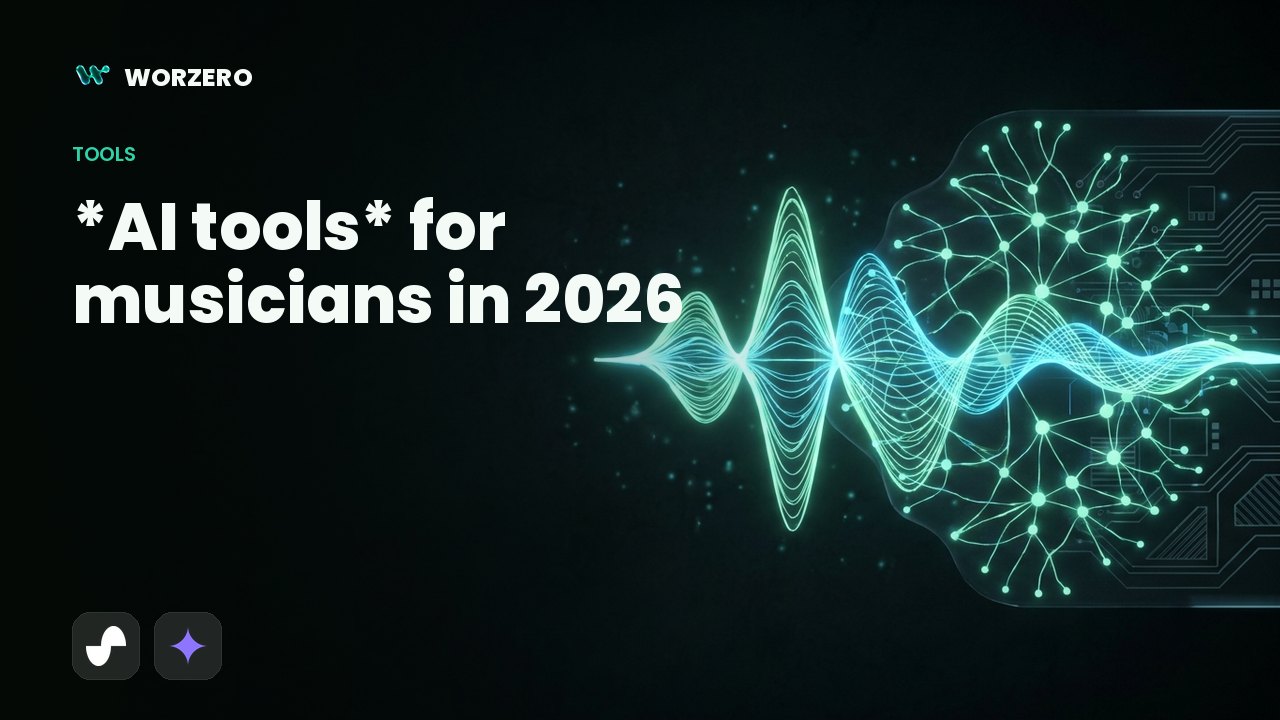
- AI doesn't replace the artist: it's a tool that speeds up songwriting, production, cover art and marketing.
- Most useful today: AI mastering, songwriting help, cover art and generating marketing ideas and copy.
- Watch the rights: read each tool's terms on who owns what you generate.
- Use it to go faster, not to have less judgement. You still bring the difference.
AI is everywhere in music, between hype and fear. The practical reality: used well, it saves you time and money; used badly, it lands you in rights trouble or makes you sound generic. Here's the honest guide to what it's actually for in 2026, by category.
For writing and producing
Some AI helps you write (starter lyric ideas, melodies or chords) and, above all, produce: AI mastering gives a decent finish for very little, and there are very useful audio-cleanup and stem-separation tools. The advice: use them as a starting point or technical help, not to have the machine make the song for you.
For visuals and marketing
Image AI generates quick cover art and visual assets (with judgement, so they don't look generic). And for marketing it's very practical: generating content ideas, copy variations, Reel scripts or descriptions. It's exactly what speeds up music marketing without losing your voice.
Good use of AI
- Mastering and audio cleanup
- Unblocking lyric or melody ideas
- Cover art and visual assets with judgement
- Content ideas and copy for socials
Where to be careful
- Releasing 100% generated tracks without checking rights
- Generic cover art that says nothing about you
- Copying another artist's voice or style
- Handing your artistic judgement to the machine
AI doesn't take the job of being an artist: it takes the boring work so you focus on what only you can do.
How to see itMind the rights
Before using anything generated, read the terms: each tool has different rules on who owns what you create and whether you can monetise it. To upload music to platforms, make sure your rights are clear. And if you want custom songwriting and production with human judgement, at Worzero we do it: music production.
Frequently asked questions
Will AI replace musicians?
No. It replaces tasks (quick mastering, ideas, cover art), not artistic judgement or the connection with an audience. Artists who use it as a tool go faster; they don't disappear.
Can I upload AI-made music to Spotify?
It depends on the tool and the rights. Always read the terms on ownership and monetisation, and make sure your rights are clear before distributing.
What is AI best for in music today?
Mastering and audio cleanup, unblocking songwriting ideas, generating cover art and speeding up marketing (content ideas and copy). It's help, not author.
Is it legal to clone an artist's voice with AI?
Using another artist's voice or style without permission is legally delicate and ethically problematic. Avoid it: build your own identity.
Does AI music sound generic?
It can, if you let it do everything. Used as a starting point with human judgement on top, it's a powerful tool; without judgement, it sounds like a template.
Want your music to actually grow?
At Worzero we build your strategy, content and ads to turn streams into real fans. Flat monthly fee, no lock-in.
See Music Production